
Art & Ecology: Coyotes of San Francisco
In collaboration with local urban ecologist Tali Caspi PhD, we presented a day of art and ecology. Exploring the interface between people and animals in the urban ecosystem of San Francisco, the show presented a series of visual works together with a talk discussing recent research in the habits of coyotes in the city.
-
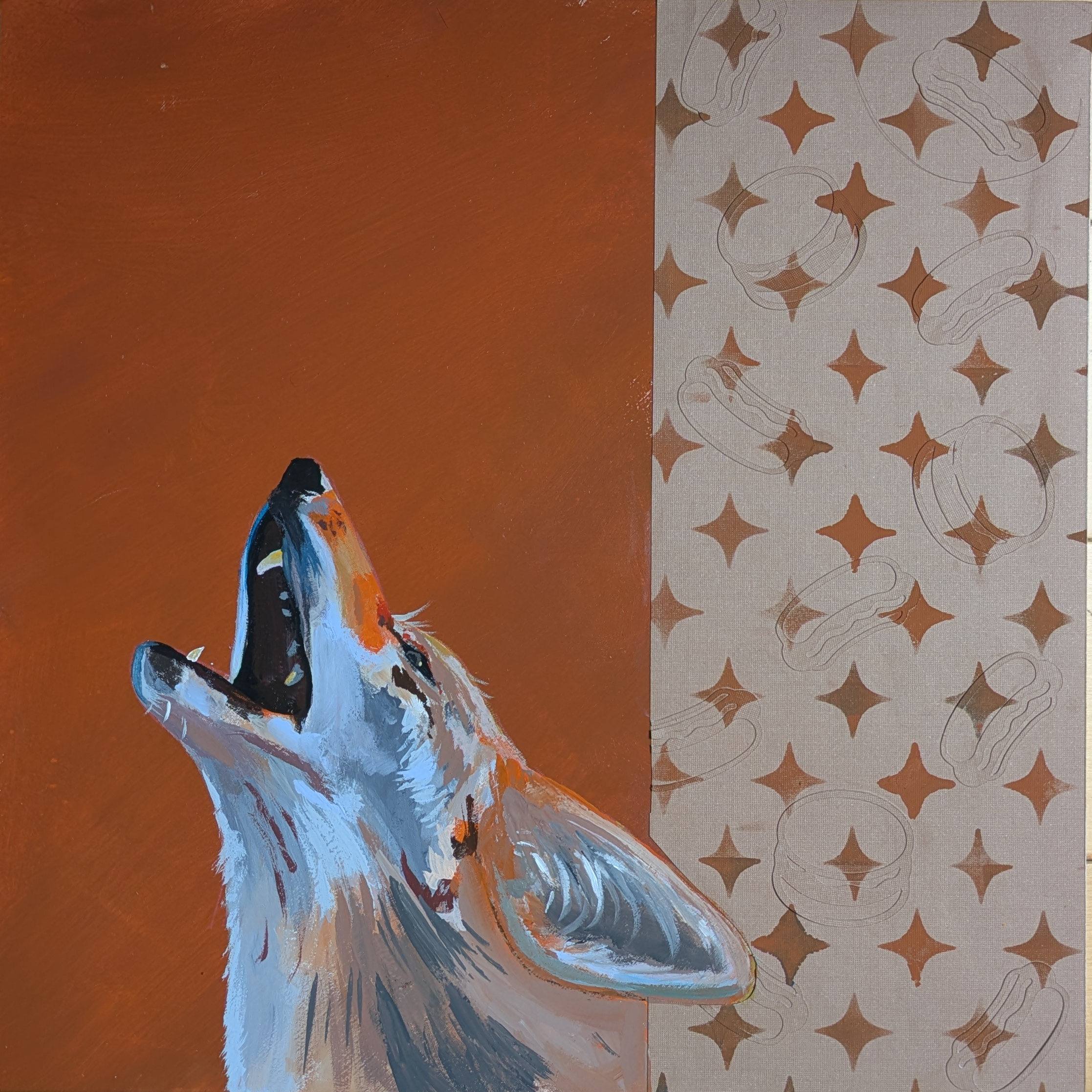
McClaren. Acrylic gouache, card-stock, wood panel, 12 x 12 inch, 2025 -
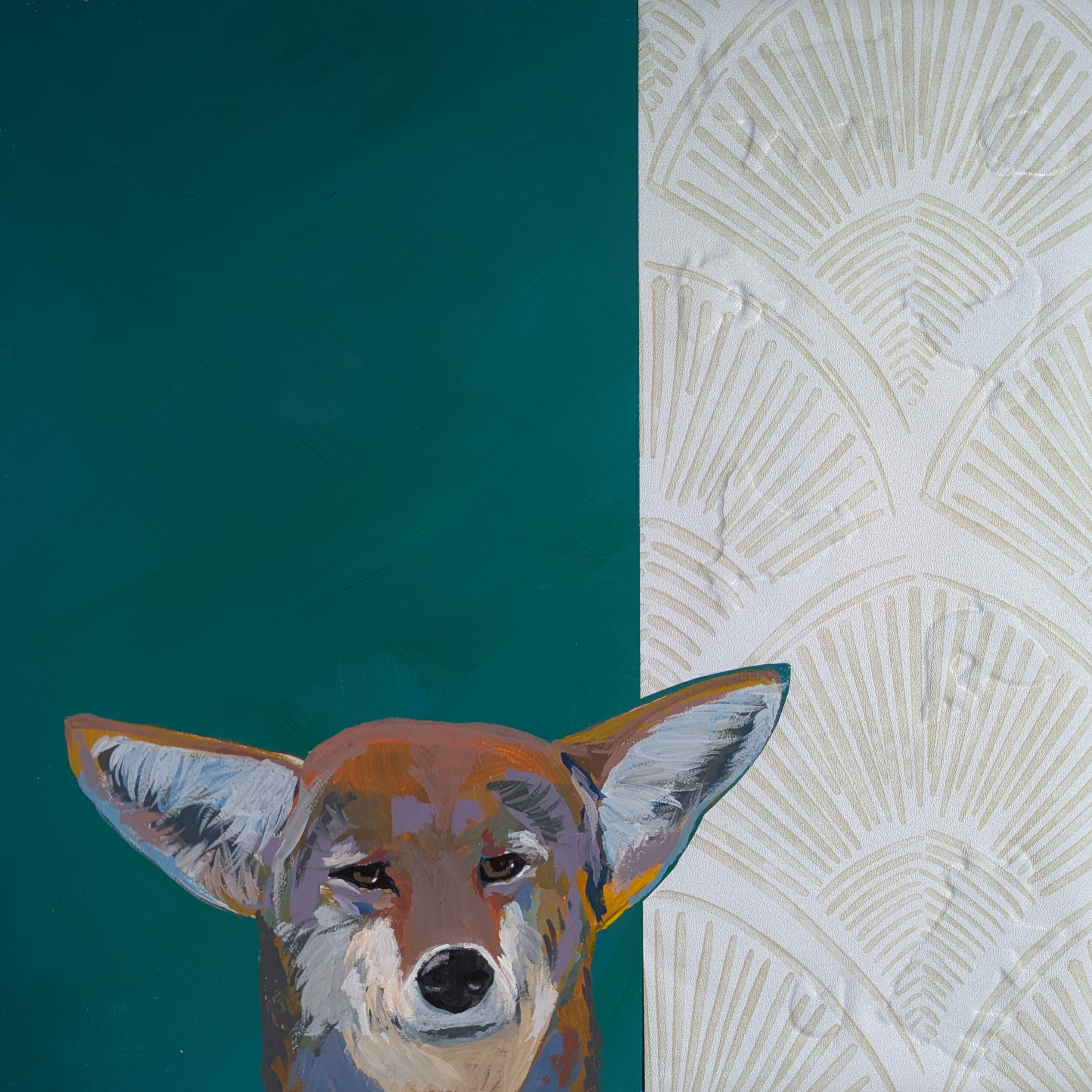
Merced. Acrylic gouache, wallpaper, wood panel, 12 x 12 inch, 2025 -
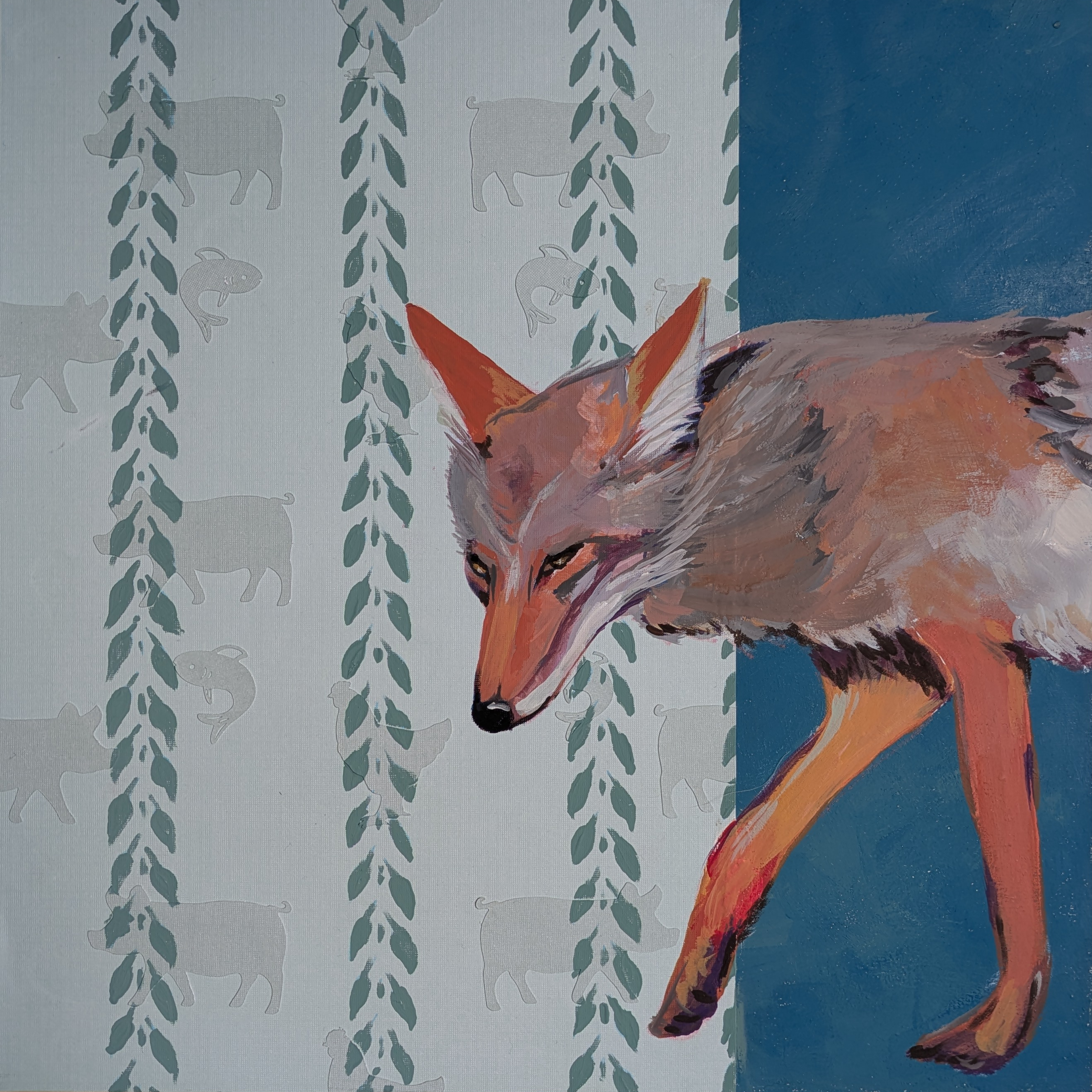
Bernal Heights. Acrylic gouache, card stock, wood panel, 12 x 12 inch, 2025 -
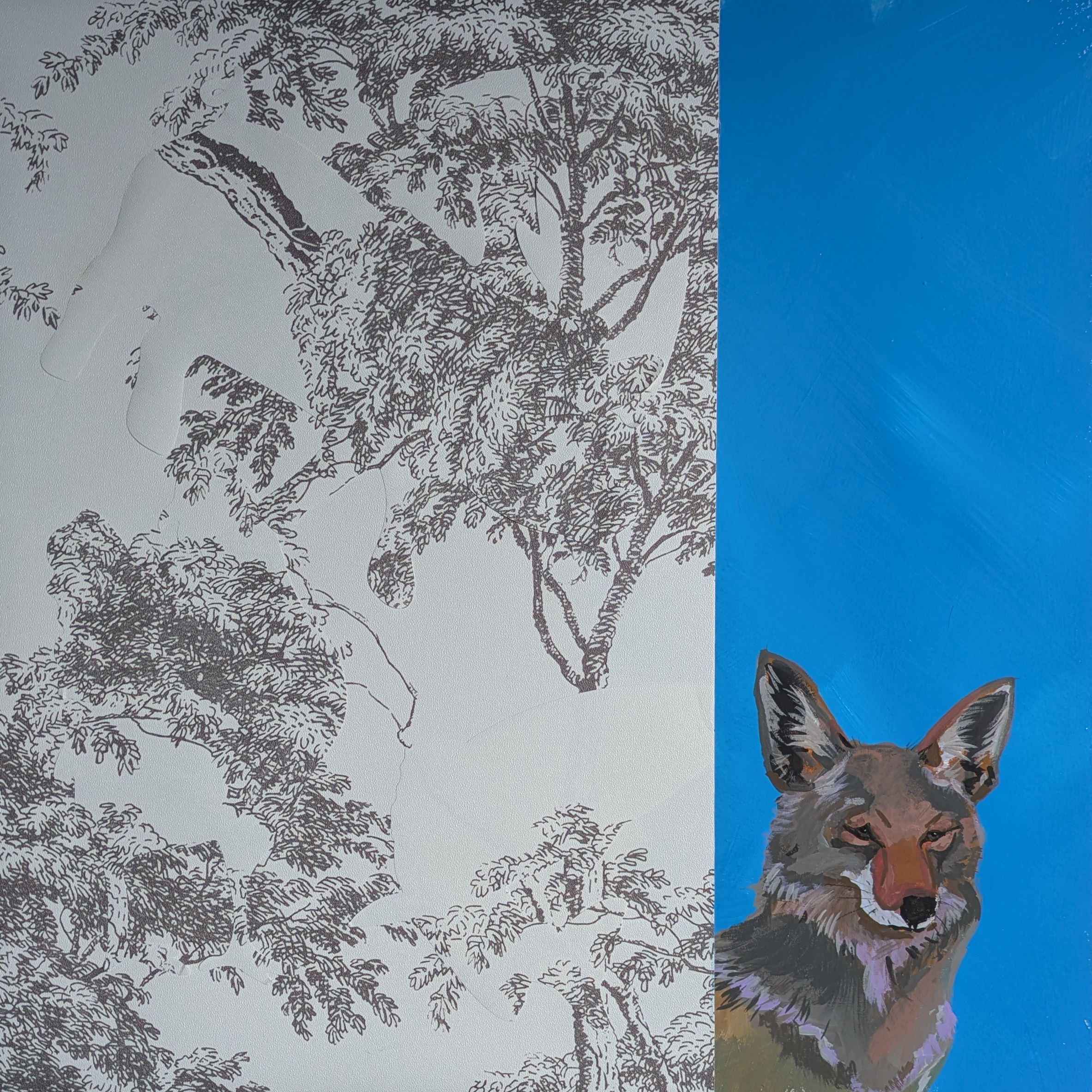
Coit Tower. Acrylic gouache, wallpaper, wood panel, 12 x 12 inch, 2025


The works consist of 10 paintings, featuring portraits of San Francisco's coyotes against a backdrop secreting data from Tali's research. The portion of the painting that contains a wallpaper motif represents the amount of diet in that area that is made up of anthropogenic (human) food sources. Viewers should compare and contrast different areas to see which allow coyotes to enjoy a more natural diet, with fewer human and pet food opportunities.
-
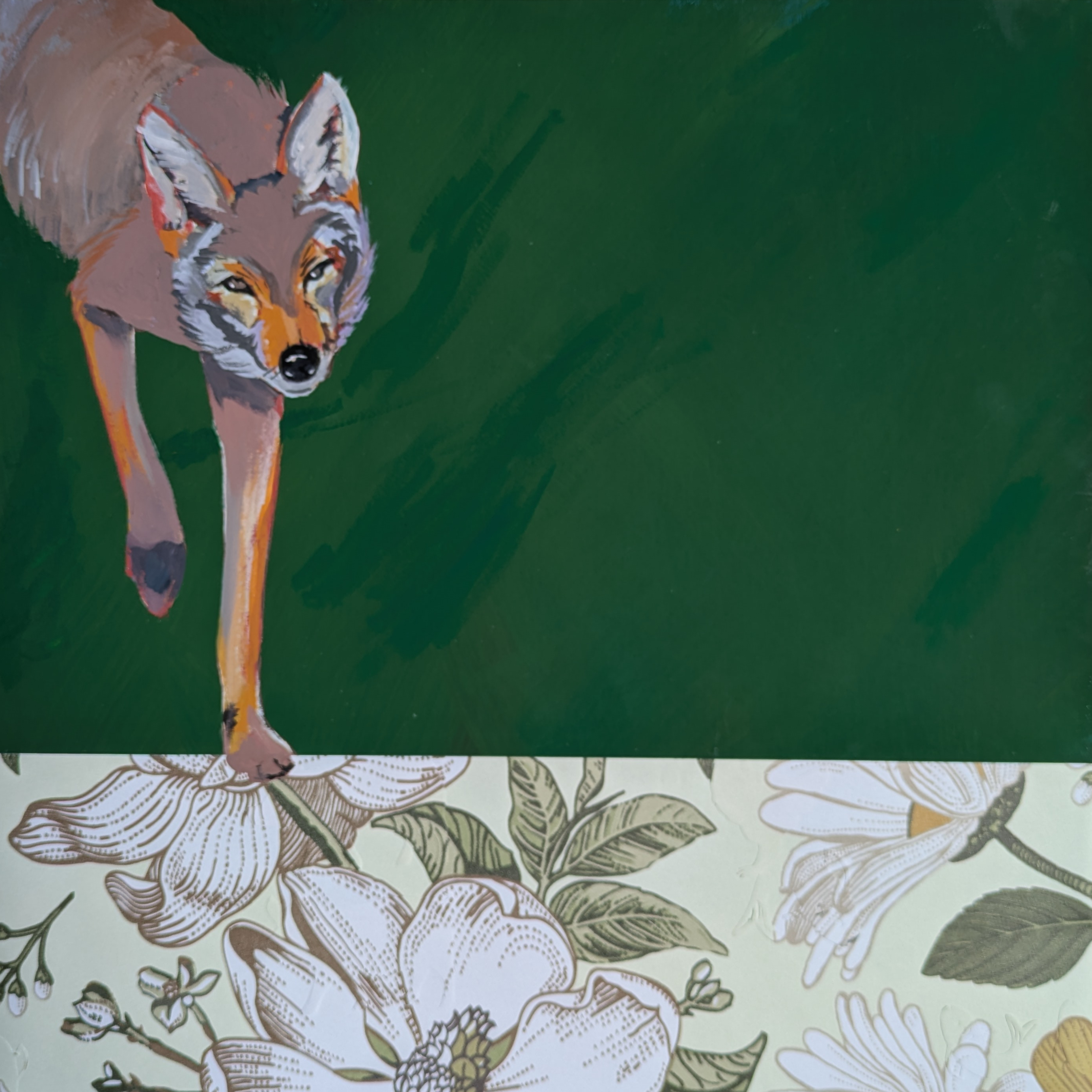
Glen Park. Acrylic gouache, wallpaper, wood panel, 12 x 12 inch, 2025 -
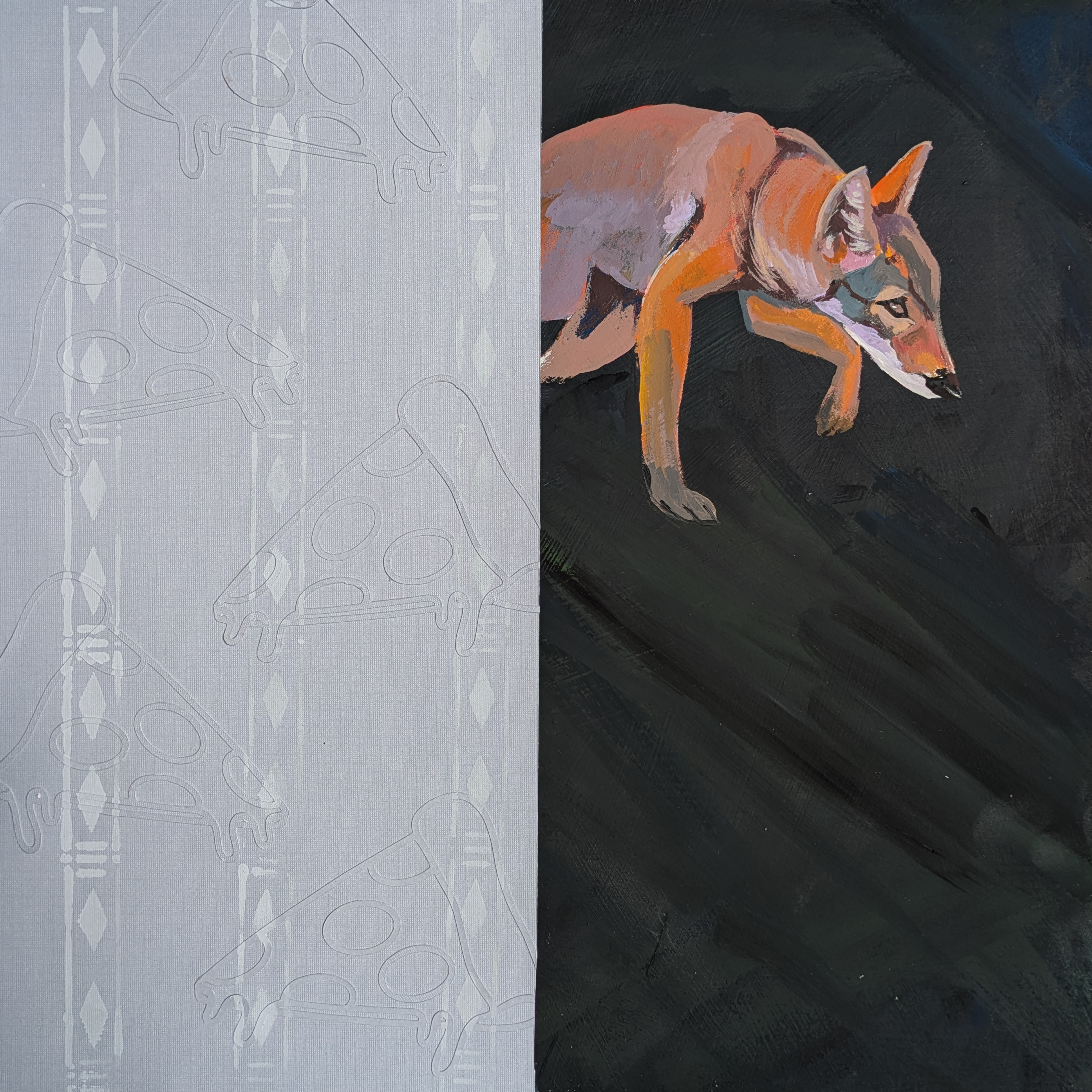
Golden Gate Park. Acrylic gouache, card-stock, wood panel, 12 x 12 inch, 2025 -
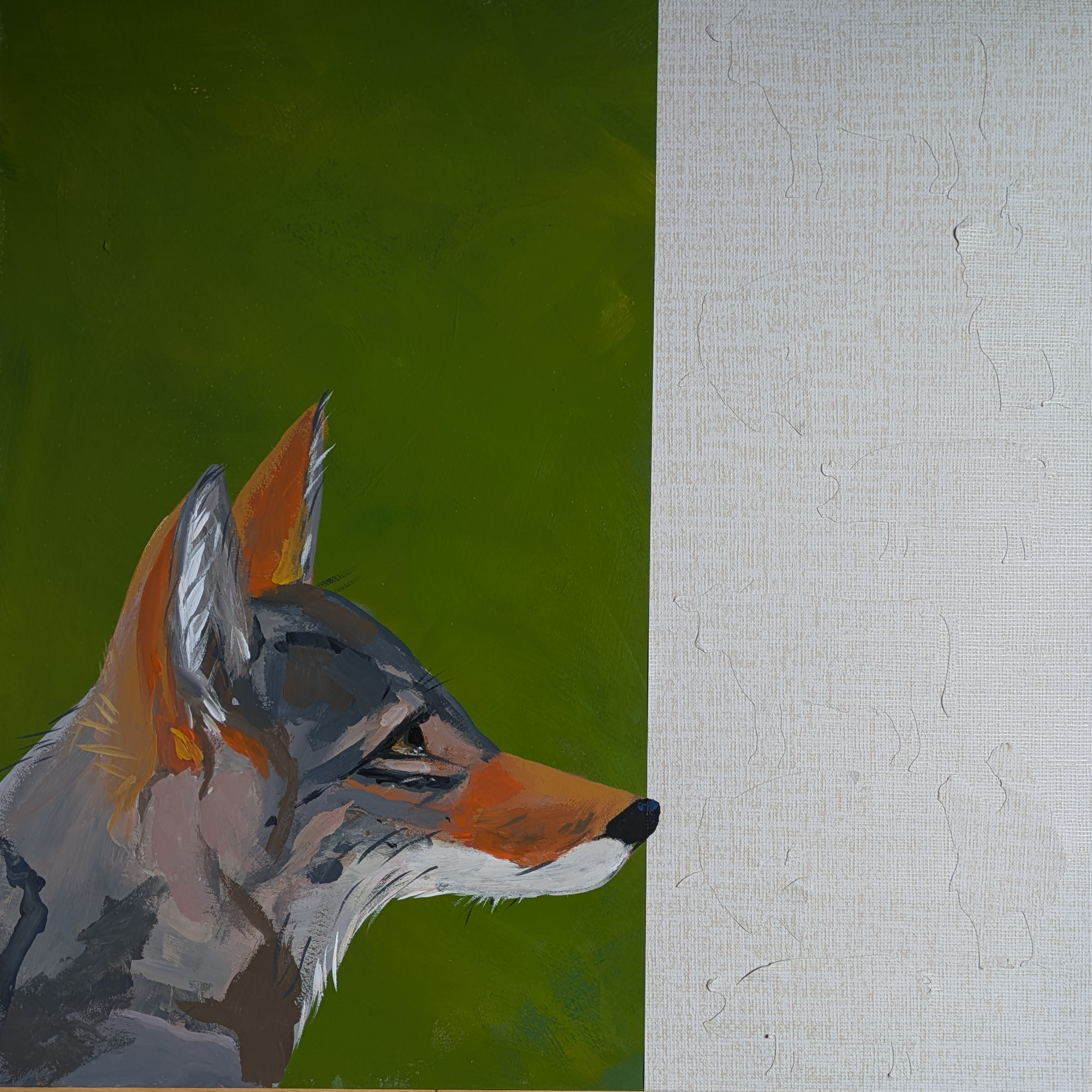
Corona Heights. Acrylic gouache, wallpaper, wood panel, 12 x 12 inch, 2025 -
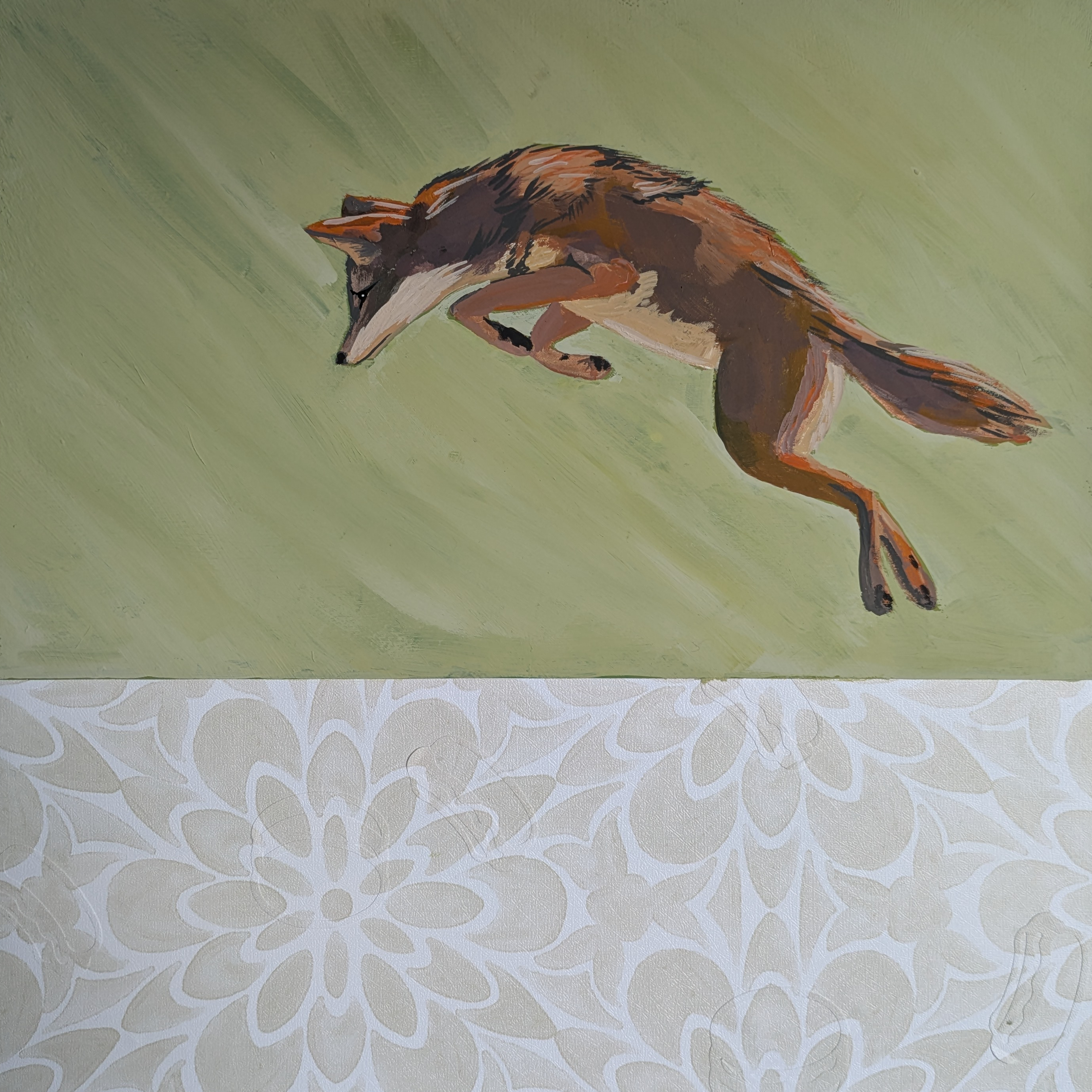
Lands End. Acrylic gouache, wallpaper, wood panel, 12 x 12 inch, 2025 -
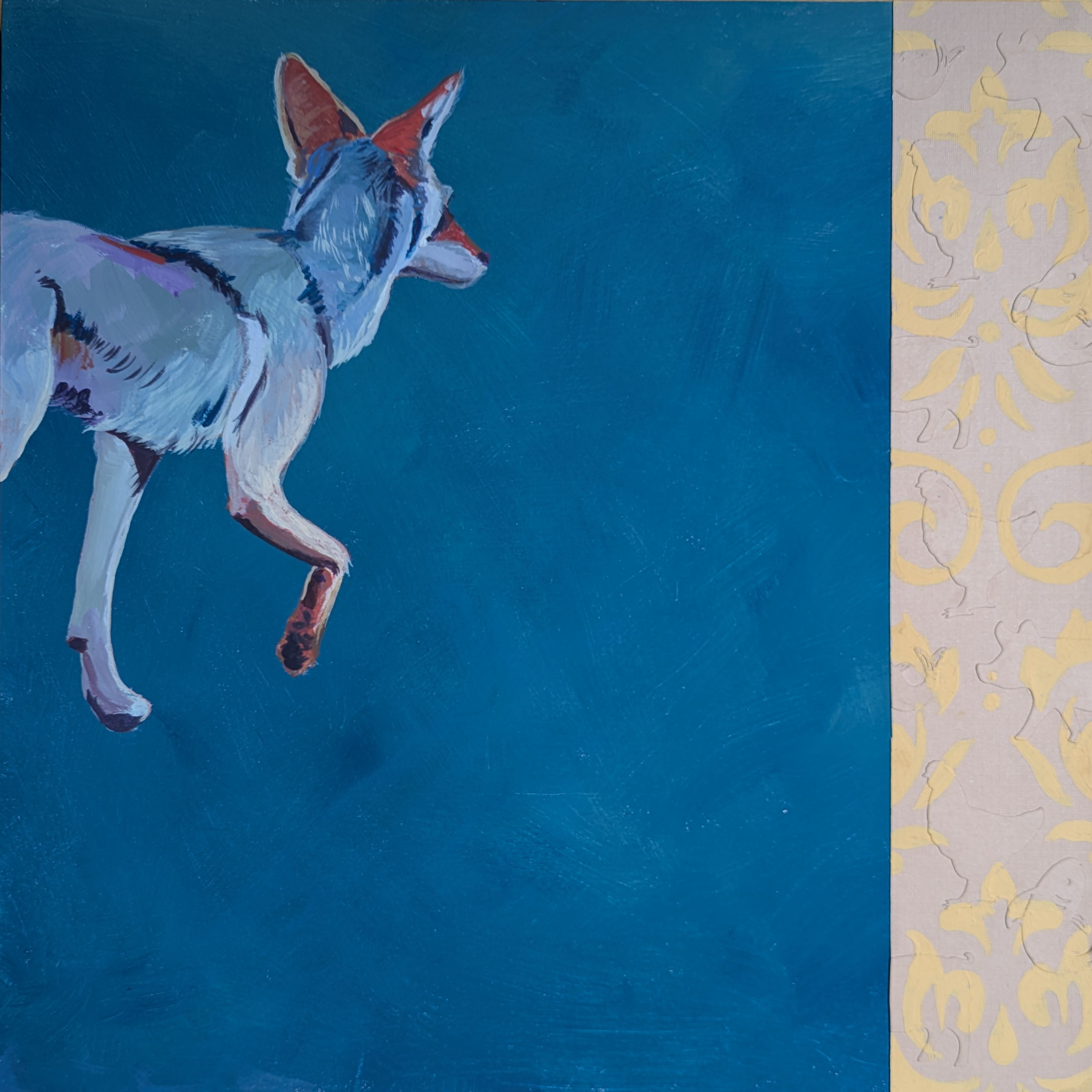
Presidio. Acrylic gouache, card stock, wood panel, 12 x 12 inch, 2025 -
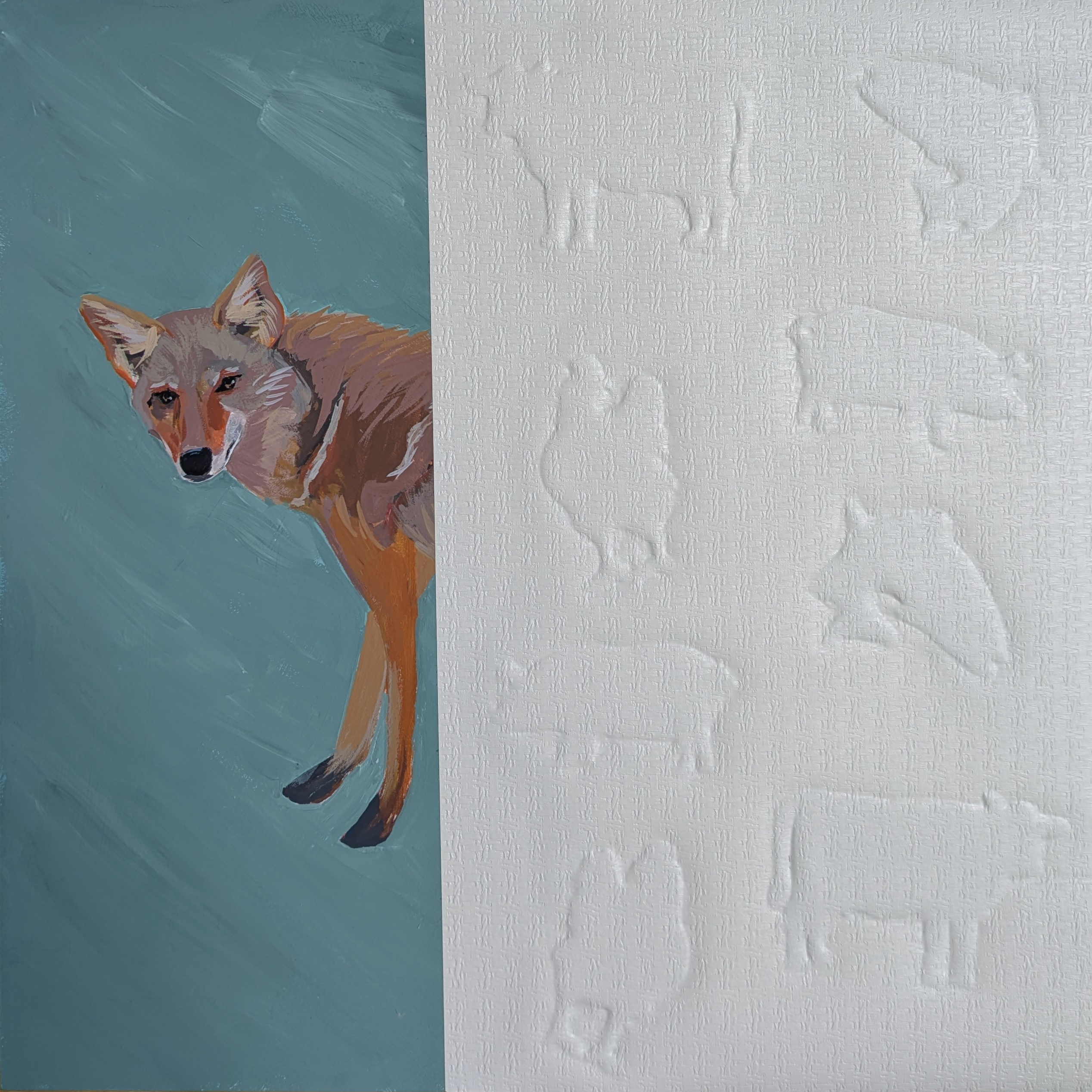
St. Francis Wood. Acrylic gouache, wallpaper, wood panel, 12 x 12 inch, 2025 -
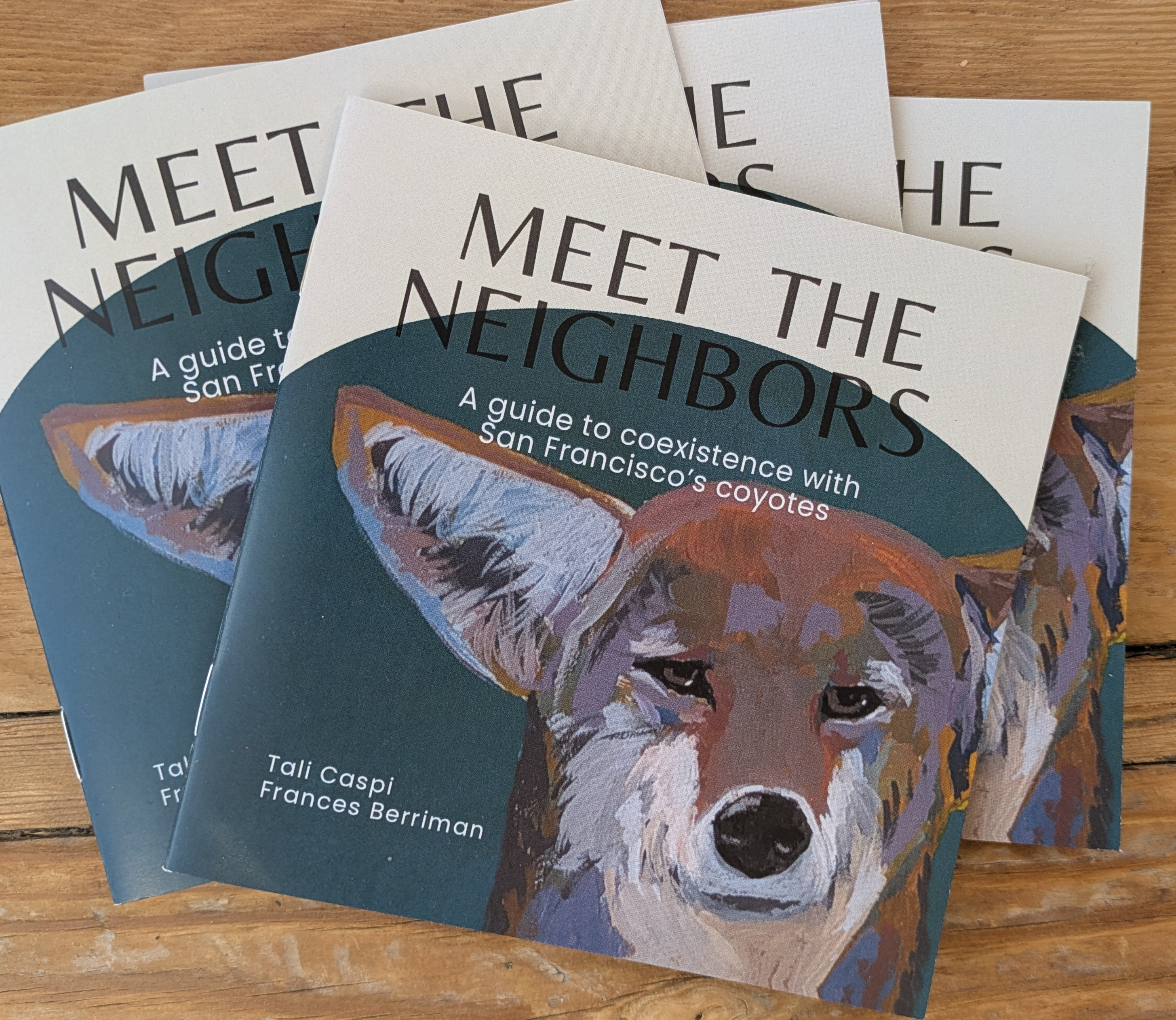
Meet the Neighbors. Printed booklet, 2025


To support the work, we produced a small handbook that both provides a keepsake of the paintings, coupled with information and advice on living in a city that has coyotes. The booklets have been used by San Francisco Animal Care and Control for educational purposes. If you would like a free copy, please reach out.
Read more about this work and Tali's research in this piece by SFGate.
References
The artwork and booklet are supported by research papers:
- Caspi T, Serrano MG, Vanderzwan SL, Kessler J, Schell CJ, Sacks BN. 2025. Impervious surface cover and number of restaurants shape diet variation in an urban carnivore. Ecosphere, 16: e70152.
- Gerraty, F.D., Carroll, T., Williams, S. and Isadore, M., 2024. Recovering predators link aquatic and terrestrial ecosystems: River otters subsidize coyotes with carrion. Ecology and Evolution, 14: p.e11444.
- Wilkinson CE, Caspi T, Stanton A, Campbell D, Schell CJ. 2023. Coexistence across space and time: Social-ecological patterns within a decade of human-coyote interactions in San Francisco. People and Nature, 5: 2158-2177.
- Sacks BN, et al. 2021. Pleistocene origins, western ghost lineages, and the emerging phylogeographic history of the red wolf and coyote. Molecular Ecology, 30: 4292-4304.
- Greer M. 2021. Coyote management in San Francisco. Master’s Capstone – USF.
- Gallagher AJ, Trull PF, Faherty MS, Freidenfelds N, Heimbuch J, Cherry MJ. 2019. Predatory behaviors of coyotes (Canis latrans) living in coastal ecosystems. Ethology Ecology & Evolution, 31: 198-204.
- Reid, R. E., Gifford-Gonzalez, D., & Koch, P. L. .2018. Coyote (Canis latrans) use of marine resources in coastal California: A new behavior relative to their recent ancestors. The Holocene, 28: 1781-1790. https://doi.org/10.1177/0959683618788714
- Reilly ML, Tobler MW, Sonderegger DL, Beier P. 2017. Spatial and temporal response of wildlife to recreational activities in the San Francisco Bay ecoregion. Biological Conservation, 207: 117-126.
- Larson S, McGranahan DA, Timm RM. 2016. The Marin County livestock protection program: 15 years in review. Proceedings of the 27th Vertebrate Pest Conference, pp 59-68.
- Sacks BN, Bannasch DL, Chomel BB, Ernest HB. 2008. Coyotes demonstrate how habitat specialization by individuals of a generalist species can diversify populations in a heterogeneous ecoregion. Molecular Biology and Evolution, 25: 1384-1394.
- Sacks BN, Ernest HB, Boydston EE. 2006. San Francisco’s Golden Gate: A bridge between historically distinct coyote (Canis latrans) populations. Western North American Naturalist, 66: 263-264.
- Sacks BN. 2005. Reproduction and body condition of California coyotes (Canis latrans). Journal of Mammalogy, 86: 1036-1041.
- Sacks BN, Brown SK, Ernest HB. 2004. Population structure of California coyotes corresponds to habitat-specific breaks and illuminates species history. Molecular Ecology, 13: 1265-1275.
- MacDonald SAT. 2002. Coyote food habits and the relative abundance of rodents in San Mateo County. Master’s thesis – San Jose State University.
- Kuenzi AJ, Lynch M, Van Vuren D, Loredo I, Morrison ML. 1998. Diets of three predators at Concord Naval Weapons Station, Contra Costa County, California. Northwestern Naturalist, 79: 64-67.